The Opposite of Fear is Freedom
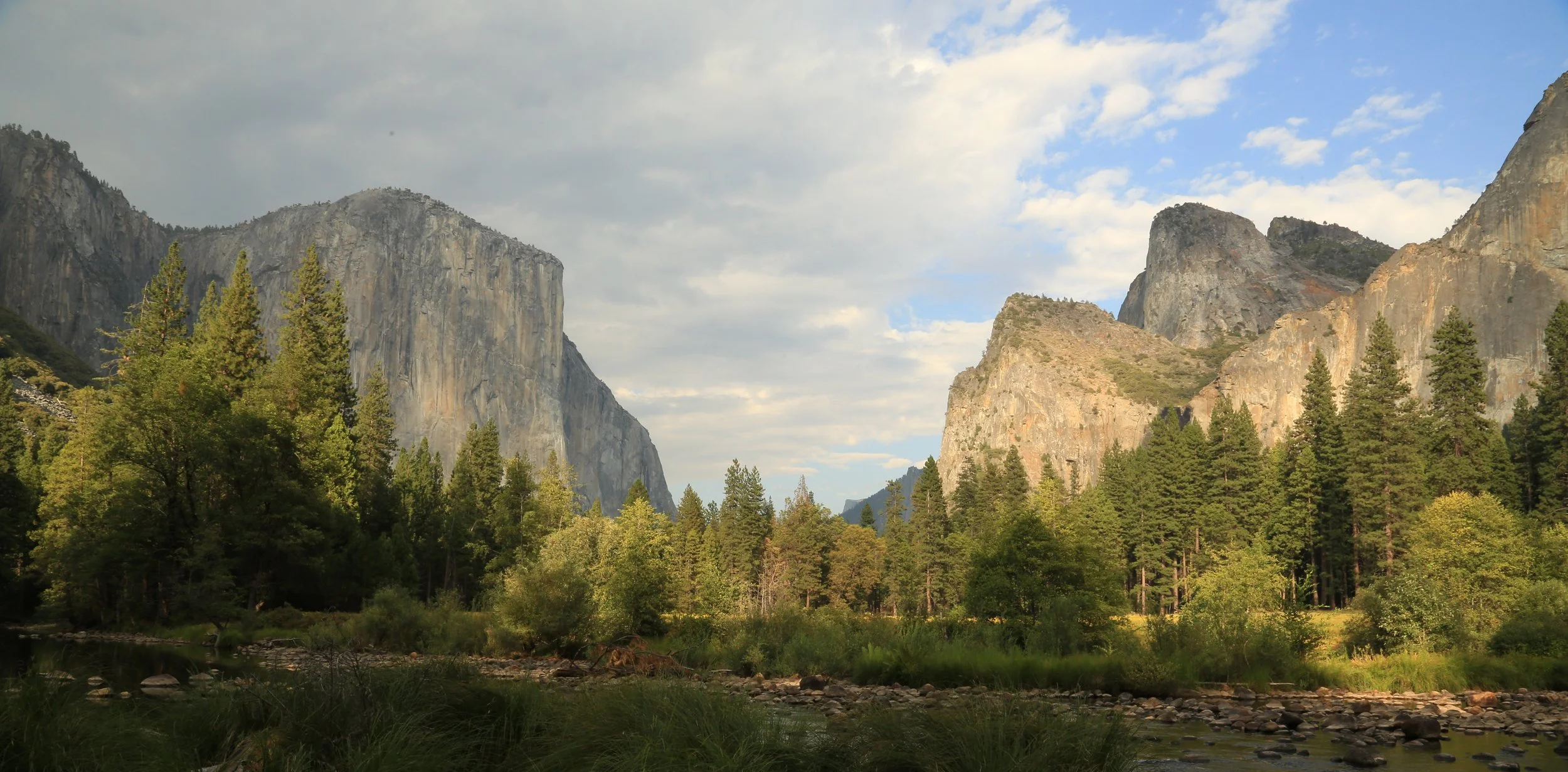
Yosemite National Park
We can have every external freedom – money, time, no obligations – and still be trapped in an invisible prison of our perceptions of what lies outside of what we know and what feels safe. We can be trapped by what we think we should do, what people might think, and what might go wrong.
The freedom that matters most is the one nobody can take from you: how we respond, what we value, who we choose to be. As Viktor Frankl famously said in his book Man’s Search for Meaning, “Everything can be taken from a man but one thing: the last of the human freedoms—to choose one's attitude in any given set of circumstances, to choose one's own way.”
Autonomy is a basic human need
Our freedom, our autonomy, is a basic psychological need. Self-determination theory (Deci & Ryan) identifies autonomy — the sense that your actions come from you, that you are the author of your choices — as one of three core psychological needs, alongside competence and relatedness. When thwarted, people don't just feel constrained, they feel psychologically diminished.
When satisfied, one experiences a sense of integrity as when one’s actions, thoughts, and feelings are self-endorsed and authentic. When frustrated, we can feel a sense of pressure and often conflict, as if we’re being pushed in an unwanted direction. When our psychological needs are met, we move forward deliberately, growing, mastering challenges and embracing and integrating new experiences.
Autonomy enables our ‘true self’ to show up, building confidence and fostering personal identity. It ensures we are self-governing rather than merely complying with external control. Autonomy, with agency (the ability to take action), is essential for leading a fulfilling, self-directed life.
The barriers to true freedom can be unconscious
Our autonomy and freedom don’t come from being fearless, unburdened, or without constraint. It comes from the choices we make, even when we’re afraid. We don’t let fear make those decisions for us. That’s often easier said than done, not just because of the power these fears hold over us, but sometimes we’re not even aware of where they lie.
There are the fears we’re conscious of, but there are those that lie in the shadows that we’re unconscious of. When it acts unconsciously, it affectively challenges and interferes with our freedom by undermining our autonomy. It impacts our behaviour and our decision-making. It can undermine the authenticity of our preferences and desires.
Self-deception is where it gets interesting
If we have a fear of heights and we’re about to do some abseiling, we are very conscious of the fear. But there are times it’s unconscious and disguises itself as:
Practicality: It's just not the right time
Wisdom: I'm being realistic
Preference: I never really wanted that anyway
Virtue: I'm being responsible, putting others first
It’s the wolf in sheep’s clothing. In those situations, it feels like we are choosing. We feel like we have autonomy and agency. But the actual driver - fear of failure, fear of judgment, fear of the unknown - is making the calls.
It’s picking from a fear-approved menu and calling it freedom.
This is what makes it so insidious and hard to challenge. If someone else controls our choices, we’d notice and resist. But when we are the ones rationalising fear as reason, there's no external friction to rally against.
We all do this to some degree, at least some of the time – it’s a psychological defence system to keep us safe, operating within our comfort zone and keep our sense of autonomy. It’s supported by a narrative that makes staying there feel like wisdom rather than avoidance.
So we need to make the unconscious conscious.
1. Notice the pattern, not just the feeling
The first move is to look for fingerprints:
Repeated avoidance of a particular type of situation
‘Reasonable’ reasons that keep appearing
Relief when something falls through (that relief can be data)
Envy of people doing the thing you say you don't want
Envy can be especially useful. This isn’t the envy of having things, but being or doing what others are, as it can be an unexplored want that fear has buried.
2. Ask better questions
Replace, Do I want to do this? or Is fear stopping me? with questions like:
If I don’t do this, am I avoiding something?
If I knew I couldn't fail, would I want to do this?
What would I be relieved to avoid if I don't do this?
If I knew I’d be successful at this, would I want to do it?
If not now, when, or am I just delaying and talking myself out of something?
Am I genuinely putting others first, or am I using them as cover?
The goal is to get underneath the rationalisation to the real driver.
3. Name it specifically
Vague fear is powerful, but when we name it, we take away some of its power. I'm scared is hard to work with. I'm scared that if I put this out publicly and it fails, it confirms I'm not as capable as people think is something you can actually examine and challenge.
The more specific, the less authority it holds. We corner it and then can address it.
4. Trace it back
Where did this fear come from? Often, unconscious fears often have a clear origin such as a past failure, messaging received in childhood, a bad experience, or things we’ve seen or heard. You don't need years of therapy to do this, just honest reflection.
Sometimes just seeing the origin dissolves some of the fear's grip.
5. Take action
Insight alone doesn't dissolve fear. The moment you act despite the fear, you collect new evidence that contradicts the story. The action doesn't have to be big. We find a small step. If, for example, deep down we want to move into public speaking, but it terrifies us, then start small – something that’s a stretch but not going to trigger a full on fight, flight or freeze response. A small genuine act of courage rewires more than a large theoretical one.
7. Build a practice of reflection
First up – when you do take action, give yourself a massive pat on the back. Be your own cheerleader. Bank these things in the evidence bank that you can dip into when fear starts getting back in the driving seat.
Also practice regular honest reflection:
Journaling with the question: What am I avoiding right now?
A trusted person who has permission to call it when they see it
Periodic check-ins against your own stated values and desires – are your choices actually aligned?

The freedom to author your own life
The greatest gift of not listening to our fears is that we get to write our story rather than passively letting it unfold. Too often, people are passengers in their own lives, carried along by habit, expectation, and unconscious and unfaced fear. True freedom is picking up the pen.
We can't be free from things we won't look at. Fear of failure, fear of judgment, fear of being too much or not enough - these run in the background, unconsciously shaping decisions you think you're making freely. True freedom demands radical honesty and doing the uncomfortable work.
The result is that every time you move through fear, you expand your world and free yourself.
Where is fear holding you back? What would you do if you stopped letting fear decide?
Sarah x
References
Viktor E Frankl, Man's search for meaning: An introduction to logotherapy (4th ed.). Beacon Press (1992)
Alan Rubel, Clinton Castro, and Alan Pham, Ensuring the Conditions of Agency. In: Algorithms and Autonomy: The Ethics of Automated Decision Systems, Cambridge University Press (2021)
Edward L Deci and Richard M Ryan, Intrinsic motivation and self-determination in human behaviour, New York, NY: Plenum (1985)