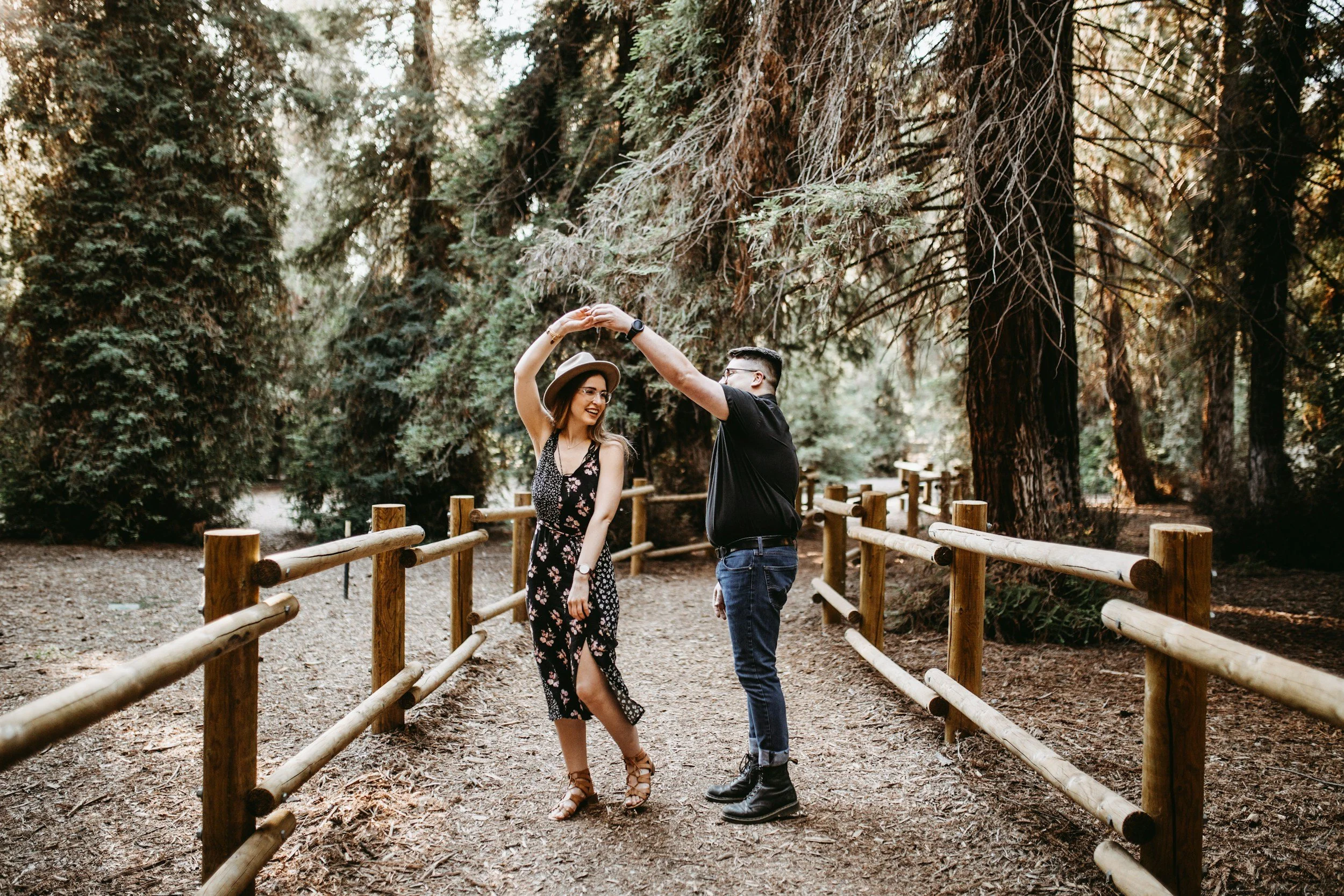
How do we navigate uncertainty? By dancing…
Change is a feature of life, not a bug. It’s the velocity of change that seems to have shifted. The result is uncertainty on steroids, and it feels like everything is moving – technology and AI, the geopolitical landscape, local politics, the economy, the workplace, the list goes on. Their interconnectivity makes it increasingly complex and impossible to predict.
Responding by trying to exert control and make it more predictable and manageable is like trying to wrestle an octopus of epic proportions. You cannot win.
Or we might hold out, hoping that things will calm down and slow down. So, we research, gather more information and more data and try to eliminate the uncertainty. Decisions are put off waiting for the elusive complete information, and actions are put on hold until the path from start to finish is mapped and predictable.
This lack of predictability and control can be stressful, particularly for those more sensitive to uncertainty, and it can be costly – more dread, less joy.
Uncertainty isn’t the enemy we think it is
Psychologists have a term for the trait characterised by the belief that ambiguity is inherently negative, stressful and unbearable – Intolerance of Uncertainty (IU). Those with a high IU view the unknown as a threat, and the result is stress, anxiety and even avoidance behaviours to gain a false sense of control.[1]
However, research suggests that the suffering is not about the not-knowing. It comes from the war we wage against it. In other words, our response to it.
A landmark study by University College London discovered that uncertainty causes more stress than inevitable pain. Participants in their study faced different probabilities of getting an electric shock – the most stressful was not when it was certain they were getting a shock, but when it was 50/50. Unpredictability was a higher-tier threat to the brain than unavoidable pain.[2]
While for those with high IU it can be more extreme, it’s normal for all of us that uncertainty elicits a stress response. Interestingly, one of the conclusions of the study was that this is not necessarily a bad thing. People whose stress responses were the highest when uncertainty was the greatest were actually better at predicting whether they would get a shock. Their conclusion was that this could have evolved from an evolutionary survival mechanism – those who are tuned to uncertainty may be able to better survive by observation and learning. It’s information that our nervous system is paying attention to.
Where possibility lies
While we may prefer a little less uncertainty, we don’t want to eliminate it. At least I don’t think the vast majority do. Certainty is a closed room in which nothing new happens. There’s no anticipation, surprise or excitement. There’s only stagnation. There’s no growth and development. And of course, no creativity or innovation. It’s a version of Groundhog Day.
We have to be open to uncertainty, build a tolerance to it and a way to navigate through it. A 2025 study of doctors entering UK foundation training found that uncertainty tolerance strongly predicted professional thriving by reducing perceived stress. Rather than causing burnout, developing coping mechanisms for unpredictable clinical environments enabled early-career doctors to experience growth and well-being.[3]
And in a series of studies with a wonderful title: ‘The Pleasures of Uncertainty’, psychologists Timothy Wilson and Daniel Gilbert found that positive events keep their glow longer when they remain a little unexplained or unexpected in what they termed the pleasure paradox. Mystery extends joy, explanation ends it.[4]
Before this, some two hundred years ago John Keats coined the phrase ‘negative capability’ for the capacity to embrace uncertainty, mystery and doubt “without any irritable reaching after fact and reason.” Note the word irritable. Keats wasn’t against facts or reason, he was against the anxious grasping for them.
This is the basis of the response to uncertainty that had me give an internal “oh my goodness yes” when I heard it:
“Uncertainty is not a problem to be solved… it’s about dancing with uncertainty.”
This was a gem writer, coach and digital creator, Paul Millerd dropped on the One You Feed Podcast. I love this reframe – a dance is the antidote to anxious grasping or trying to wrestle that octopus. A dance is finding the beat in music you didn’t compose and can’t predict. Have a look at these improv swing dancers if you want to see the most perfect embodiment of this:
https://www.youtube.com/watch?v=tsX87384tnQ
Now, we are not all going to be uber talented swing dancers like them. But we can find a way, our way, our wiggle, our dance to the beat of uncertainty.
Learning the steps: how to build your tolerance
The best news is that tolerance of uncertainty is not a fixed trait and we can build our capacity through ‘uncertainty exposure’. Deliberately practising not-knowing, which has been shown to measurably reduce worry and anxiety. The method is less about heroics than about small, repeated, even playful experiments and finding our dance.
1. Run small experiments. Build a ladder from trivial to meaningful. Try a new route to work, have a crack at a new hobby, have a go at improv, do a short course on AI, speak up at a meeting. Keep searching for ways to head into the unknown.
2. Acknowledge the fear and discomfort. Whether it’s as part of the experiments, work, or following our own goals, when that flutter of fear and resistance comes on, don’t rush to do whatever it takes to close it down. Observe it, ask where it comes from, what it’s really about. Is it a fear response that’s keeping you safe, or one that’s being overprotective? If it’s the latter, where’s the path through it? Don’t put fear in the driving seat.
3. Unpack risks. While we can’t predict exactly what might happen, we can list out the risks and threats, and their consequences/estimated probabilities. Surface the assumptions being made. We can then make informed decisions, even if they are based on incomplete information or uncertain outcomes.
4. Hold plans lightly. This was a lesson forced on me through my expeditions. The only certainty was that it would never go as planned. Expect things to change and know you’ll have to adapt. If we expect it, we are not surprised. We build some capacity into our plans, in the way we allow time for delays in getting to an airport for a flight. Then keep an eye out for things not going to plan and risks eventuating.
5. Calibrate your crystal ball. Before heading out, unpack the risks, fears and any catastrophising - write it down. Then after, reflect and write down what actually happened. You start to recalibrate a threat detector that runs hot.
The dance
None of this means pretending uncertainty always feels good. Sometimes the music is fast, and you’d rather sit down. But a dance is the right metaphor, I think, precisely because it’s gentle and playful: you can hold a partner lightly, you can miss a step and laugh, you can let yourself be led for a while, you can find your own rhythm.
Uncertainty is not a problem to be solved. It’s the medium we live in and the space where possibility is waiting. We can wage war on that space, and lose slowly. Or we can learn the steps, hold it gently, and dance.
Sarah x
[1] Boswell JF, Thompson-Hollands J, Farchione TJ, Barlow DH. Intolerance of uncertainty: a common factor in the treatment of emotional disorders. J Clin Psychol. 2013 Jun;69(6):630-45.
[2] de Berker, A., Rutledge, R., Mathys, C. et al. Computations of uncertainty mediate acute stress responses in humans. Nat Commun7, 10996 (2016).
[3] Peek R, Arnold R, Moore L. Greater tolerance of uncertainty facilitates thriving in doctors entering postgraduate training. BMC Med Educ. 2025 Jul 16;25(1):1062.
[4]Wilson, T. D., Centerbar, D. B., Kermer, D. A., & Gilbert, D. T. (2005). “The pleasures of uncertainty: Prolonging positive moods in ways people do not anticipate.” Journal of Personality and Social Psychology, 88(1), 5–21.