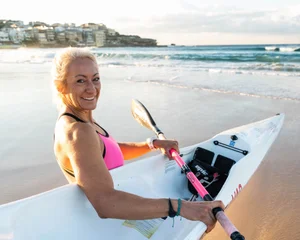
Meet Wilson Who’s Helping My Preparation
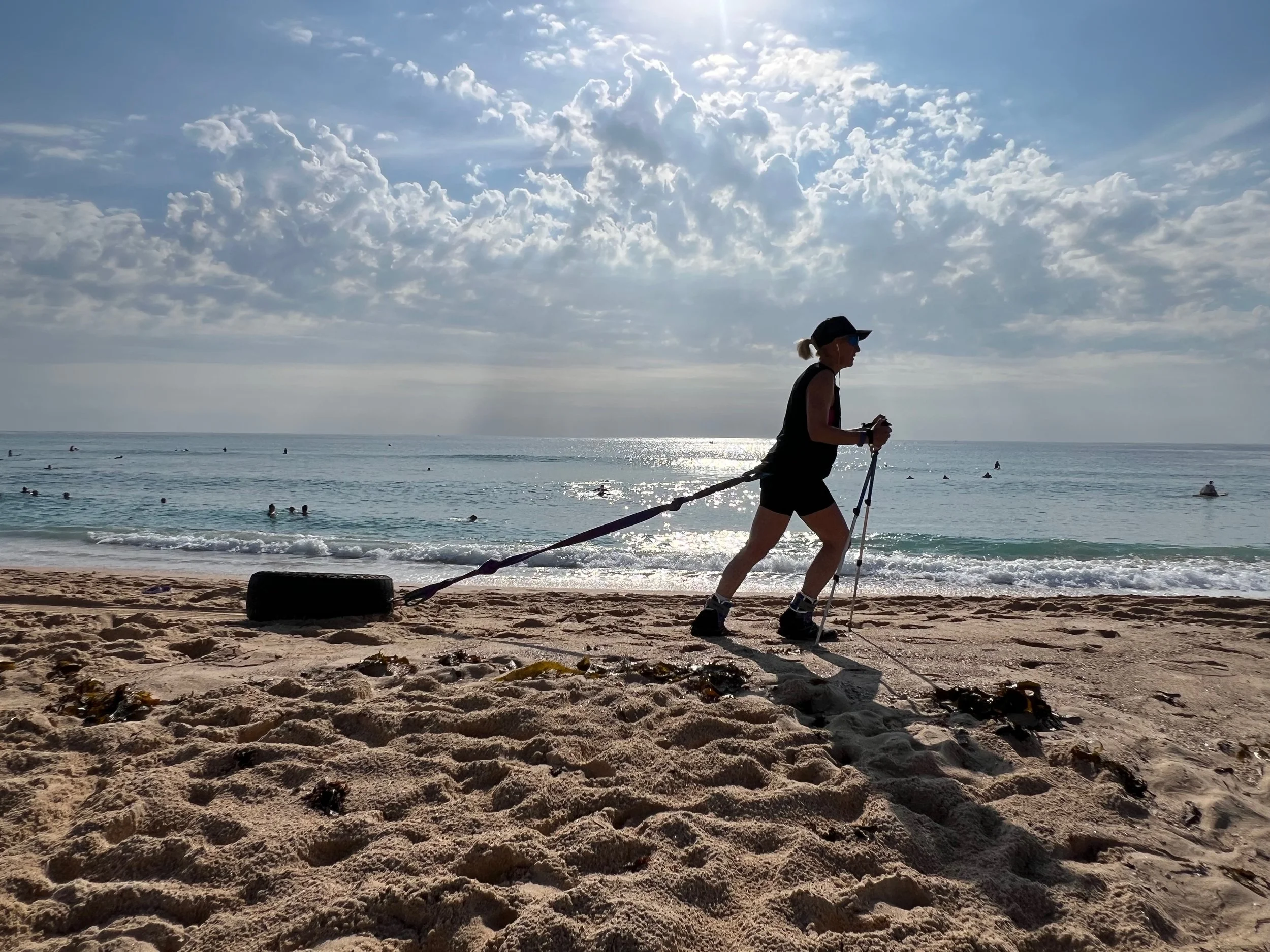
This is how I spent my Sunday morning - dragging Wilson (the tyre) up and down Maroubra Beach. It's part of the preparation for my next expedition, Pole to Pole, to be physically ready to drag a pulk (a form of sled) as I ski to the South Pole. Some people joked that it looked like fun as I passed them, to which I replied, “Yeah, I really don’t recommend this!” It wouldn’t make a list of 100 things I’d choose to do on a Sunday morning, but it will pay dividends when I begin my trek across the frozen wilderness. Future Sarah will be grateful for the hours invested.
That’s one of the challenges with preparation – most of the time, it’s not fun. In fact it can be boring, tedious and at the bottom of a list of more interesting things we’d rather be doing. However, as one version of the adage goes: you don’t rise to the occasion, but fall to the level of your preparation.
The higher the risks or potential negative consequences, the greater the need for preparation. Or conversely, investing in preparation means we can take greater risks.
Preparation enables us to take more risk because it:
reduces the likelihood or consequence of something negative happening; and/or
means we can respond effectively if it does.
A simple example is going to the travel doctor before a trip. Vaccinations reduce or eliminate the chance of getting a disease, or at least reduce the severity. In addition, there might be meds you take with you, ready if you get sick.
It is risk management.
And it goes without saying that it's not just for travel or expeditions. At work, the examples are endless:
testing before putting an upgrade live with rollback procedures ready
having crisis communication plans before they’re needed
building and testing business continuity plans
doing budget estimations and ensuring there are adequate funds before launching a new business
practising delivering an important presentation
It is not only for these higher-consequence situations.
Back when I was at Macquarie, I was running a project with a colleague. We had an unnecessarily senior Steering Committee. Ahead of SteerCo, we’d have short one-on-ones with each member to brief them on progress, issues and items coming up for approval. It made for smooth meetings. Then one day, with nothing contentious on the agenda, we decided to skip the pre-meeting. We learned the hard way what a staggering error that was – we left that SteerCo picking out bullets.
Preparation is key. I can’t write an article like this without including the well-known Benjamin Franklin quote: "By failing to prepare, you are preparing to fail."
As I said, none of this is wildly interesting, which can make it tempting to skip. But, it’s a form of future pain avoidance.
There is also generic preparation.
Not all preparation is for a specific situation. Some of it is about building the person who will handle whatever comes.
Ahead of my Nile expedition, while I couldn’t predict exact scenarios, I knew it was going to be mentally challenging as much, if not more than, physically challenging. I invested time in developing my mindset and ability to respond to high-pressure situations. And that preparation paid off.
This kind of preparation is less about readiness for a known task and more about expanding our baseline capability. It’s learning how to be a better public speaker before there’s an actual speech to deliver. Learning how to have difficult conversations before a hard one lands in your lap. Developing skills and tools to deal with fear before the moment your heart starts racing.
Perhaps the most valuable form is simply building a regular practice of stepping outside your comfort zone, not for any specific reason, but to make discomfort familiar. So that when the stakes are higher, leaning in feels like a natural response rather than a heroic one.
Where it becomes a problem.
We can use it against ourselves, and excuses can masquerade as the need for preparation. There’s a fine line between being genuinely prepared and using preparation as a reason to delay. Sometimes, ‘not being ready’ is less about genuine capacity and more about fear, telling ourselves we need more preparation when, in reality, we’re using it as a socially acceptable reason to avoid something uncomfortable, uncertain, or risky. In that sense, preparation becomes a barrier rather than an enabler.
Ways to guard against it include:
Setting a ‘ready enough’ threshold – the minimum preparation required, and committing to act when it’s reached
Time-box preparation
Ask honestly whether you’re truly underprepared, or if it’s fear
Get objective feedback from a mentor, friend or colleague
Don’t let preparation become a barrier rather than an enabler.
Pole to Pole preparation.
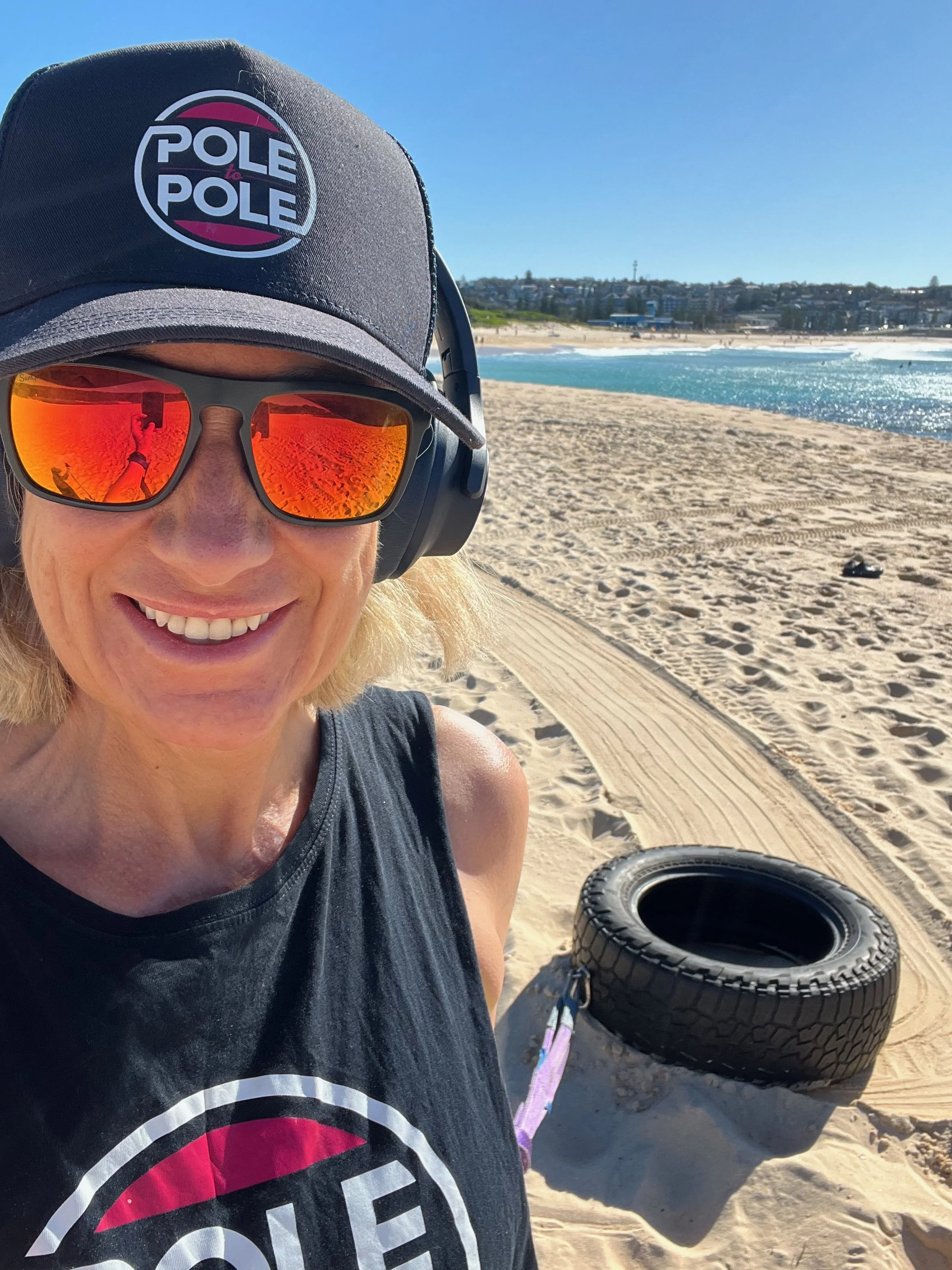
This expedition needs extensive preparation beyond time with Wilson at Maroubra Beach, including:
Skills and knowledge training – first aid, wilderness survival, hostile environment awareness training, more polar training, ocean navigation
Risk assessment – an in-depth risk assessment for each leg with mitigation plans and approaches
Food planning – particularly for the ocean row and the South Pole legs
Physical preparation – rowing, cycling, tyre dragging, putting on muscle
There’s a lot more, and it generally gives me a headache when I think about it for too long!
Preparation doesn’t just set us up for success, or at least give us a better chance of being successful. It gives us confidence. For me, it will help give me the much-needed confidence to make it to the start line and then keep moving forward.
"Every battle is won before it is fought." Sun Tzu
What preparation could you do, or should you do, that your future self will be grateful for?
Sarah x